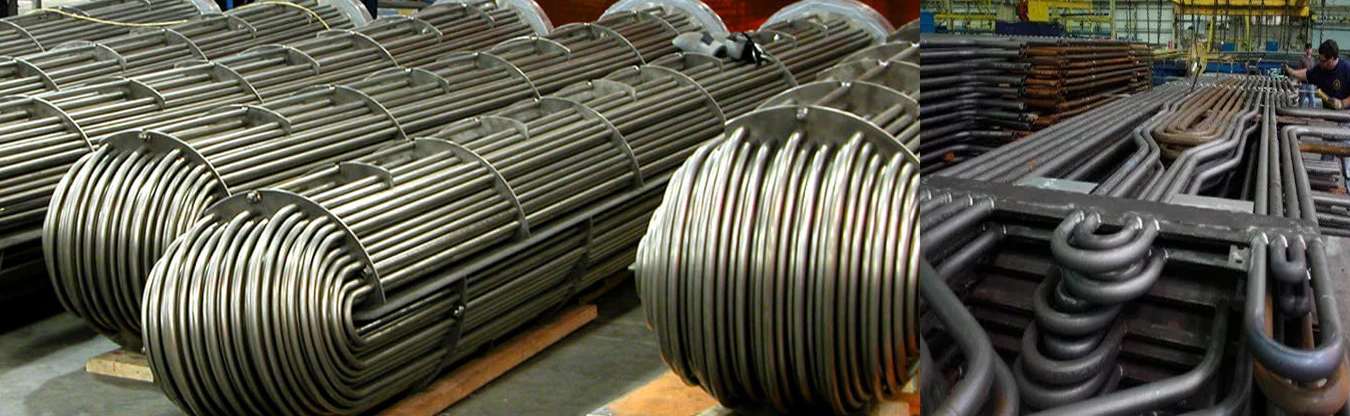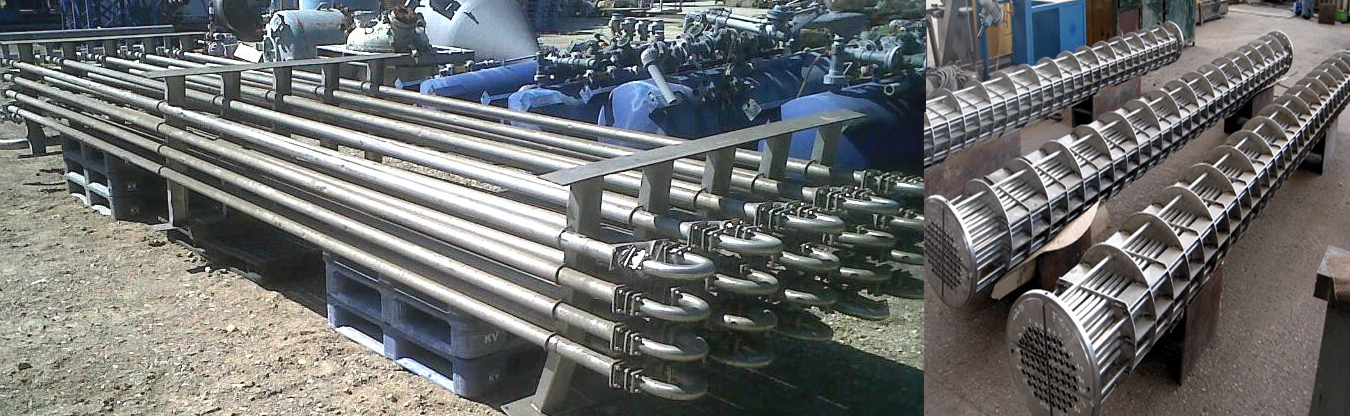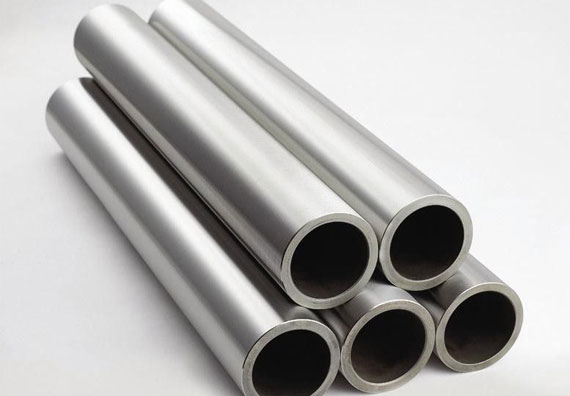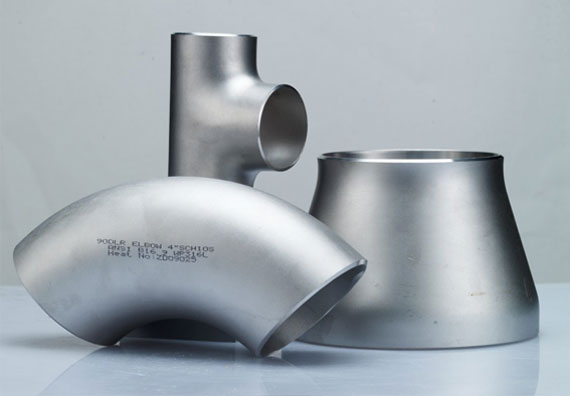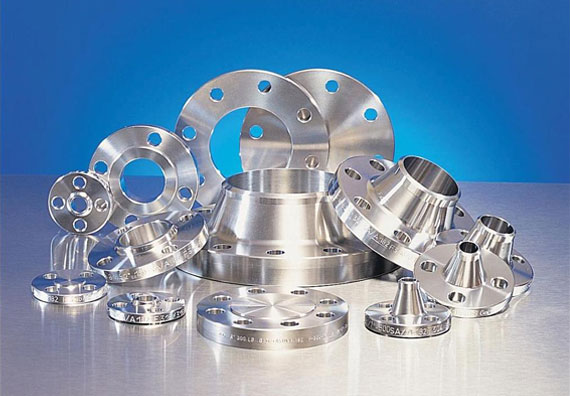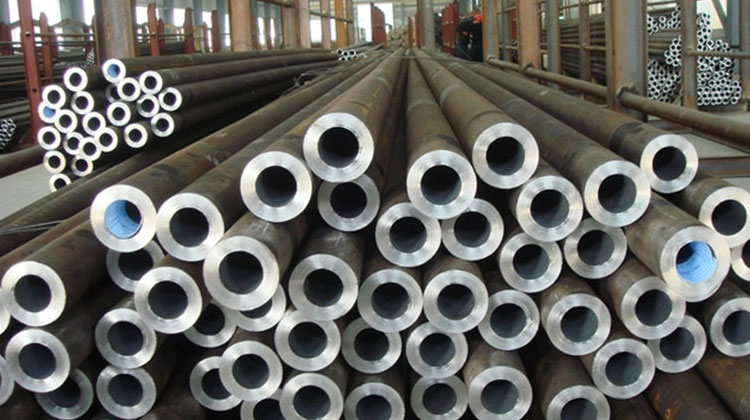
As the Indian Government is racing in its efforts to provide power supply to each and every corner of the country. This will definitely lead to high growth of industries. Power - which is essential element for industrial development has to be generated constantly and continuously. This requires high capacity power station. The main equipment of such power stations is High Capacity Boilers. These boilers are having Alloy Steel Tubes which withstand operating temperatures of about 600 degrees Centigrade (1110 degrees Fahrenheit) and pressure up to 320 bar (4645 PSI) over the planet life - a period of several decades.
Alloy Steel Boiler Tubes in India are governed by the Indian Boiler Regulations Act. Each pipe / tube is required to be genuine, of reputed make and certified by the IBR.
Motilal Laxmichand Sanghavi - We are one of the leading stockiest of IBR certified alloy steel pipes and tubes. The material is available in ready stock with IBR certificates in Form III - A and III - B respectively for pipes and tubes.
Specifications governing Alloy Steel Tubes are as under:
Pipes |
Tubes |
| ASTM A 335 Grade P - 11 |
ASTM 213 Grade T - 11 |
| ASTM A 335 Grade P - 12 |
ASTM 213 Grade T - 12 |
| ASTM A 335 Grade P - 22 |
ASTM 213 Grade T - 22 |
| ASTM A 335 Grade P - 9 |
ASTM 213 Grade T - 5 |
| ASTM A 335 Grade P - 9 A |
ASTM 213 Grade T - 9 |
| ASTM A 335 Grade P - 5 |
ASTM 213 Grade T - 9 A |
| BS 3604 Grade 620 - 440 |
ASTM 213 Grade T - 2 |
| BS 3604 Grade 621 |
ASTM 213 Grade T - 1 |
| BS 3604 Grade 622 |
ASTM 213 Grade T - 1 B |
| BS 3604 Grade 625 |
DIN 17175 15 Mo 3 |
| BS 3604 Grade 629 - 470 |
DIN 17175 13 Cr Mo 44 |
| BS 3604 Grade 629 - 590 |
DIN 17175 10 Cr Mo 910 |
| BS 3604 Grade 660 |
DIN 17175 14 Mo V 63 |
| BS 3604 Grade 762 |
DIN 17175 X 20 Cr Mo V 121 |
KALYANI FORGE & FITTINGS
Office-171/173,2, Contractor Bldg,Office no.22,
2nd floor, PrathnaSamaj, Raja Ram Mohan
Roy Road,Charni Road Mumbai-400004
Email-kalyaniforge9930@gmail.com
Mob-9920773222
Tel-022-6659574
|
BS 3059 Grade 243 |
| BS 3059 Grade 620 - 460 |
| BS 3059 Grade 622 - 490 |
| BS 3059 Grade 629 - 470 |
| BS 3059 Grade 629 - 590 |
| BS 3059 Grade 762 |
As the manufacturing facilities in India are limited to 8" NB. We have made special arrangements to keep a constant ready stock of alloy steel material up to sizes 10" NB, 12" NB, 14" NB, 16" NB in Schedule 20, 40, 60, 80, 100, 160, XXS, as well as some higher wall thickness material up to 45 mm thick, in all alloy steel specifications. Our complete size range comprises of 15 mm NB to 16" NB.
In tube sizes, smaller size range from 19.05 mm OD up to 101.6 mm OD in Wall Thickness of 2.11 mm up to 12.7 mm thick is available in ready stock with us in all alloy steel specifications.
1. For D =< 3 in.
1.1 tolerances on outside diameter (D)
| Hot finished tubes |
Usual standards |
Cold drawn tubes |
| Diameter |
Standards requirements |
MLS |
Diameter |
Standards requirements |
MLS |
| mm |
in. |
mm |
in. |
mm |
in. |
mm |
in. |
mm |
in. |
mm |
in. |
| 76.2 max. |
3 in. max. |
+ 0.4 -0.8 |
+1/64
-1/32 |
+/- 0.4 |
+/- 1/64 |
ASTM
A 192
A 209
A 210
A 213 |
D=<25.4
25.4<D=<38.1
38.1<D<50.8
50.8=<D<63.5
63.5=<D<76.2
D = 76.2 |
D =< 1
1<D=<1.5
1.5<D<2
2=<D<2.5
2.5=<D<3
D = 3 |
+/- 0.1
+/- 0.15
+/- 0.2
+/- 0.25
+/- 0.3
+/- 0.38 |
+/- .004
+/- .006
+/- .008
+/- .010
+/- .012
+/- .015 |
According
to Standards |
76.2
max. |
3 in.
max. |
+/- 0.75 %
min.
0.5 |
+/- 0.75 %
min.
.020 |
+/- 0.4 |
+/- 1/64 |
DIN17175 |
76.2
max. |
3 in.
max. |
+/- 0.6 %
min.
+/- 0.25 |
+/- 0.6%
min.
.010 |
| D =< 63.5 |
D=< 2.500 in. |
+/- 0.5
+/- 0.75% |
+/- .020
+/- 0.75% |
+/- 0.4 |
+/- 1/64 |
NFA A 49-213 |
D =< 33.7
33.7<D=<75.2 |
D=<1.33
1.33<D=<3 |
+/- 0.25
+- 0.50 %
min
+/- 0.25 |
+/- 0.10
+/- 0.50 % min.
+/- .010 |
1.2 tolerances on wall thickness (T)
Hot Finished tubes |
Usual
Standards |
Cold draw tubes |
Wall thickness |
Standards
requirements |
MLS |
Diameter |
Standards
requirements |
MLS |
| mm |
in. |
mm |
in. |
| On minimum W.T.:Tm |
|
On minimum W.T. : Tm |
Tm=<2.4
2.4<Tm=<3.8
3.8<Tm=<4.6
Tm>4.6 |
Tm=<.095
.095<Tm=<.150
.150<Tm=<.180
Tm>.180 |
+ 40% - 0
+ 35% - 0
+ 33% - 0
+ 28% - 0 |
+ 28% - 0
+ 28% - 0
+ 24% - 0
+ 22% - 0
|
ASTM
A 192
A 209
A 210
A 213 |
D=<38.1
D>38.1 |
D=<1 1/2
D>1 1/2 |
+ 20% - 0
+ 22% - 0 |
According
to standards |
| On nominal W.T.: Ta |
|
On nominal W.T.: Ta |
| Sn = standard W.T. according to DIN 2448 |
According
to standards |
DIN 17175 |
Refer to "Hot finished tubes" |
Ta=<2Sn
2Sn<Ta=<4.Sn
Ta>4Sn |
+15% - 10%
+12.5%-10%
+/- 9% |
| All W.T. |
+/- 12.5%
min 0.4 mm
min. .016 in. |
According
to standards |
NF A 49-213 |
All diameters |
+/- 10% |
According
to standards |
Guidelines for fabrication procedures
| GRADES |
OPERATIONS |
GUIDELINES |
Grade A
Grade B
360
410
St. 35.8
St. 45.8
TU 37-C
TU 41-c |
Cold bending |
heat treatment at 1200/1300ºF after heavy bending |
| Hot bending |
-temperature Zone to be avoided 1380/1560ºF advisable working temperature :
light bending:< 1380ºF
heavy bending: 1560/2000ºF |
| Welding |
no preheating final heat teatment for W.T. >= 10 mm(3/8 in.) annealing at 1300ºF |
Grade C
440
460
490 Nb
17 Mn 4
19 Mn 5
TU 48-C
TU 52-C
|
Cold bending |
heat treatment at 1200/1300ºF after heavy bending |
| Hot bending |
temperature zone to be avoided 1380/1560ºF
advisable working temperature
light bending:<1380ºF
heavy bending: 1560/2000ºF |
| Welding |
preheating at 300/400ºF for W.T.>= 20mm(3/4 in.)
final heat treatment for W.T.>= 10mm(3/8 in). annealing at 1300ºF |
P 1
T 1
243
15 Mo 3
16 Mo 5
TU 15 D 3 |
Cold bending |
light bending: no heat treatment
heavy bending: annealing at 1250ºF necessary |
| Hot bending |
Temperature zone to be avoided 1380/1650ºF
advisable working temperature:
light bending: < 1380ºF
heavy bending: 1750/2000ºF(1)
|
| Welding |
perheating at 400ºF min. recommended for W.T.>= 20mm or 3/4 in. (light preheating possible for W.T. < 20 mm or 3/4 in.)
final heat treatment:
W.T.>= 20mm(3/4 in.) tempering at 1250ºF
W.T. < 20mm(3/4 in.) tempering at 1250ºF recommended but not compulsory |
P2
T2
TU 15CD 2.05 |
Cold bending |
light bending: no heat treatment
heaving bending: annealing at 1300ºF necessary |
| Hot bending |
temperature zone to be avoided 1380/1650 ºF
recommended working temperature.
light bending:<1380ºF
heavy bending: 1750/2000 ºF - annealing at 1250ºF (1) |
| Welding |
preheating at 400ºF min. recommended for W.T. >= 10mm or 3/8 in. (light preheating possible for W.T> < 10 mm or 3/8 in.)
final heat treatment: annealing at 1250ºF (2 mn 30s per mm W.T. with 20mm minimum) then air cooling |
| 15 NiCuMoNb 5 |
Cold bending |
light bending: no heat treatment
heavy bending: normalizing at 1650/1800ºF tempering at 1075/1220ºF |
| Hot bending |
refer to specification SEW 088(available upon request) |
| Welding |
Preheating at 210ºF minimum for W.T. >=(1 1/4 in.)
(temperature to maintain during complete operation)
final heat treatment annealing at 985/1095ºF
(2 mn per mm W.T. minimum 20 mn) then air cooling |
P 11
T 11
621
13CrMo44
Tu 13CD 4 04
TU 10CD 5 05 |
Cold bending |
light bending: no heat treatment
heavy bending: annealing at 1300ºF necessary |
| Hot bending |
temperature zone to be avoided : 1380/1650ºF
recommended working zone:
light bending: 1250/1380 ºF
heavy bending: 1750/2000ºF - tempering at 1300ºF(1) |
|
| GRADES |
OPERATIONS |
GUIDELINES |
P 11
T 11
621
13 CrMo 4 4
TU 13CD 4 04
TU 10CD 5 05 |
Welding |
Preheating 400ºF minimum for W.T.>=10 mm(3/8 in.)
(temperature to maintain during operation)
light preheating possible for W.T. <10 mm(3/8 in.)
final heat treatment: tempering at 1300ºF (2mn 30s per mm W.T., 20 mn minimum)then air cooling. |
|
P 22
T 22
622
10 CrMo 9 10
TU 10CD 9 10
|
Cold bending |
light bending: no heat treatment
heavy bending annealing at 130/1380ºF necessary |
| Hot bending |
temperature zone to be avoided: 1380/1650ºF
recommended working temperature: |
| Welding |
Preheating: 400ºF minimum (maintain during complete operation)
final heat treatment.
tempering at 1330/1380ºF(2mn 30s per mm or .04 in. W.T., 20 mn minimum)
then air cooling
or better: complete heat treatment |
P 9
T 9
629
X 12 CrMo 9 1
Tu Z 10CD 9 |
Cold bending |
Light bending: no heat treatment
heavy bending: annealing at 1380ºF necessary |
| Hot bending |
avoid water cooling
recommended working temperature: 1750/2000ºF
after bending, repeat complete heat treatment.
(or just anneal when temperature < 1830ºF) |
| Welding |
preheating 570ºF minimum (maintain during complete-operation)
final heat treatment: tempering at 1380/1430 ºF
(2mn 30s per mm or .04 in W.T., minimum 60mn) then air cooling |
|
T 9 1
P 9 1
TU Z 10CDNb V 9.2
|
cold bending |
possible if: D=< 60 mm(2 1/2 in.) and Eex =< 20%
if Eex =< 5% stress relieving annealing can be avoided except in case of stress corrosion cracking hazard
if 5%<Eex=<20%:stress relieving annealing at 1380ºF +/- 70ºF
Note:Eex=elongation at extrados |
| Hot bending |
bending at 1200/1430ºF, then annealing at 1380ºF +/- 70ºF if: W.T.=<0.1 D and R >=2.5 D and Eex=<10% bending at 1740/1920ºF then normalizing at 1900ºF min. and tempering at 1350ºF min. if:
W.T.=<0.1 D and R min. 2.5 D and Eex=< 20%
or W.T.>0.1D
or R between D and 2.5D
(Eex can be more than 20%)
bending between 1470 and 1740ºF shall be avoided water cooling is prohibited
Note: R=bending radius |
| Welding |
preheating: 480ºF min. interpass temperature 570ºF min.
preheating 180ºF for 2 hours,
then slow air cooling.
PWHT: 1380ºF +/- 50ºF for 2 hours |
| 762 X20 Cr MoV 12 1 |
Cold bending |
avoid if possible
if necessary, annealing afterwards at 1380ºF |
| Hot bending |
water cooling prohibited
recommended working temperature: 1750/200ºF
after bending, repeat complete heat treatment; if not possible, tempering at 1340/1470ºF |
| Welding |
preheating: 570ºF minimum(maintain during complete operation)
final heat treatment: after welding, cooling below 300ºF
(But not below 210ºF for heavy W.T.)
then tempering at 1380ºF for 2hours minimum |
|
Typical steel grades
| Max. service temp. |
475ºC / 885ºF |
500ºC / 930ºF |
550ºC
1020ºF |
560ºC
1040ºF |
575ºC
1065ºF |
600ºC / 1110ºF |
625ºC
115ºF |
650ºC
1200ºF |
ASTM
A 106
A 192
A209-A210
A213-A335 |
Gr.A
A 192 |
Gr. B
Gr. A. |
Gr.C
Gr.C |
|
|
T1
P1 |
|
T2/P2 |
T12/P12 |
|
T 11/P 11 |
T22/P22 |
|
|
T9/P9 |
T91/P91 |
BS
3059-3602-3604 |
360 |
410 |
440-460 |
490Nb |
243 |
|
|
|
620 |
|
621 |
622 |
660 |
|
629 |
762 |
DIN
17175
Vd TUV W.BI.
(Werkstoff-Nr.) |
St 35.8
1.0305 |
St 45.8
1.0405 |
17Mn4
1.0481 |
19 Mn5
1.0482 |
15 Mo 3
1.5415 |
16 Mo 5
1.5423 |
15 NiCuMo Nb 5
1.6368 |
|
13 CrMo44
1.7335 |
|
|
10 CrMo 910
1.7380 |
14 MoV 63
1.7715 |
|
X12CrMo 91
1.7386 |
X20 CrMoV121
1.4922 |
GOST
TY14-3-460-75 |
|
20 |
|
|
|
|
|
|
15XM |
12X1MF |
|
|
|
15 X 1M1F |
|
|
JIS
G3456 G3458
G3461 G3462 |
STPT 38
STB 35 |
STPT 42
STB 42 |
STPT 49 |
|
|
STPA 12
STBA 12 |
|
STPA 20
STBA 20 |
STPA 22
STBA 22 |
|
STPA 23
STBA 23 |
STPA 24
STBA 24 |
|
|
STPA 26
STBA 26 |
|
| NF A 49-213 |
TU 37-C |
TU 42-C |
TU 48-C |
TU 15 D 3 |
TU 15 D 3 |
|
|
TU 15CD 2.05 |
TU 10CD 5.05 |
|
TU 10CD 5.05 |
TU 10CD 9.10 |
|
|
TUZ 10CD 9 |
TU Z 10CDNbV 9.2 |
|